
Web Design
How Much Does a Website Cost in Oman? (2026 Prices)
What a website really costs in Oman in 2026 — honest OMR ranges by site type, what each tier buys, and how to avoid inflated agency quotes.
Read articleThe 9 mistakes that sink small business websites in Oman, the symptom each one causes, and the specific fix — most without a full rebuild.
TL;DR: Most Omani small business websites fail for a short list of fixable reasons, not bad luck. The big ones: slow on mobile, no Arabic version, invisible on Google, no clear way to contact, and abandoned after launch. Oman has fast mobile networks, so a slow site is the build's fault, and 53% of mobile visitors leave if a page takes over three seconds. A site with no Arabic and no local SEO misses most of the market that searches in Arabic. Every one of these is fixable, usually without a full rebuild.
Most small business websites in Oman fail for the same handful of reasons, and almost all of them are fixable. The site is not cursed and the business is not the problem. The build is. With 130,359 registered SMEs in Oman (Oman Observer) and 95.3 percent of the country online (DataReportal), the customers are there. A failing site just cannot reach them, convince them, or get them to act.
We build and fix these sites for a living through our web design service in Oman. The nine mistakes below are the ones we see again and again, each with the fix. Most cost far less than the rebuild owners assume they need.
Omani websites rarely fail because of bad design. They fail on fundamentals: slow load, no Arabic, no search visibility, no clear next step, and no upkeep. A site can look modern and still lose every visitor it gets.
The pattern repeats across verticals. A restaurant, a clinic, a law firm, a school. The logo and colours change, the same five or six gaps stay the same. The owner paid for something that looks like a website but does not work like one, then decides websites do not pay off. The site was never set up to.
Here is the full list. Each one is a section below, with the symptom and the fix.
The 9 mistakes, in order:
- It loads too slowly on mobile
- There is no Arabic version
- It is invisible on Google
- No clear call to action or WhatsApp button
- It was built once and abandoned
- Weak trust signals
- It talks about the business, not the customer
- Built on a cheap template with no ownership
- It does not work as a sales tool
The most common reason an Omani website fails is simple: it takes too long to load on a phone. Google's research shows the probability of a mobile visitor bouncing climbs sharply as load time goes from one second to three (web.dev, Google), so a slow page loses a big share of its visitors before they read a word.
Here is the part owners miss. Oman has fast mobile networks. The median mobile download speed is 133.84 Mbps, with the country ranked 21st in the world (Ookla). So a slow site is not the connection's fault. It is the build, usually huge unoptimised images, a bloated template, and cheap hosting.
Fix: Compress your images, drop the unused template code, and move to faster hosting. Test on mobile data, not office WiFi. Aim for under three seconds, ideally under two.
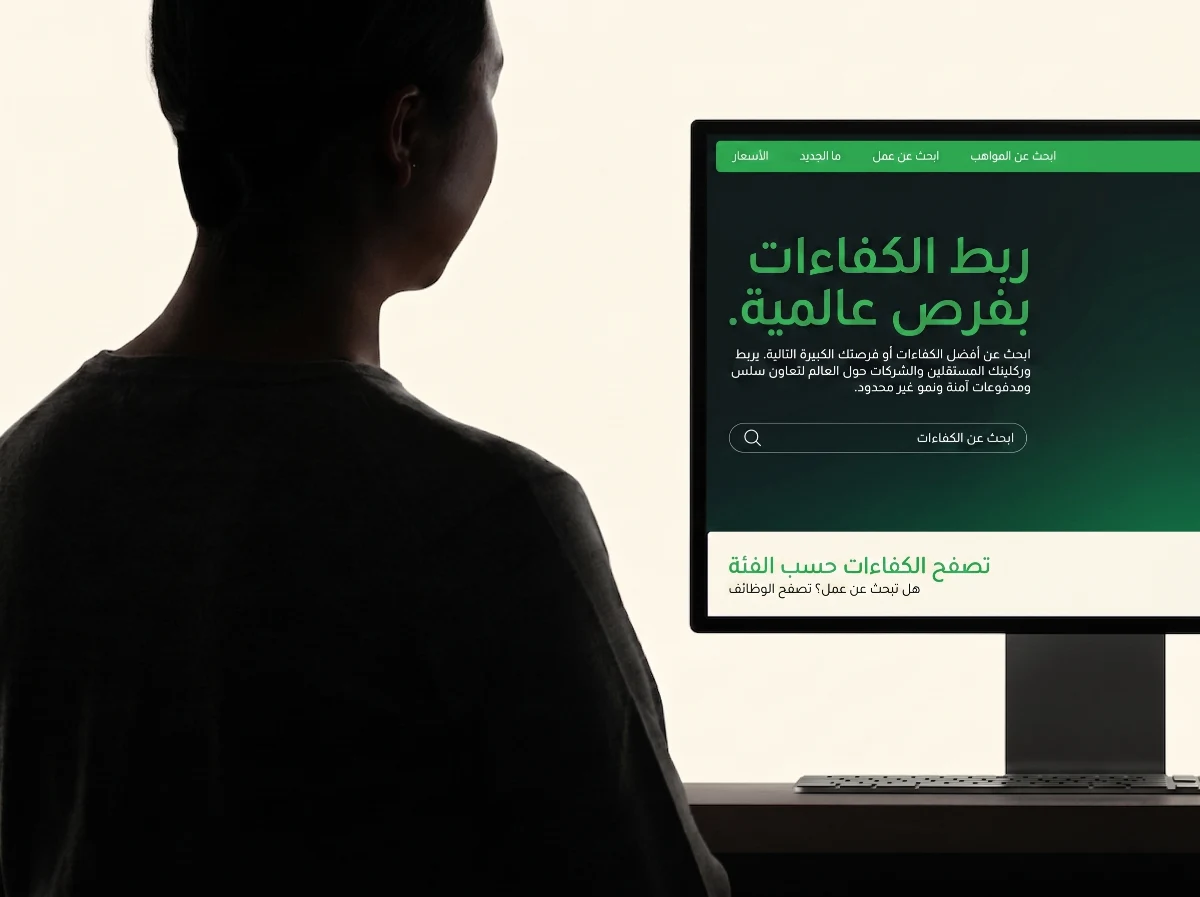
A site with no Arabic version cuts off a large part of the Omani market. Much of your audience is Arabic-first, and they search, read, and trust in Arabic. An English-only site quietly tells them this business is not really for them.
This is the gap most local competitors leave wide open. With 95.3 percent internet penetration (DataReportal) and very few businesses publishing genuine Arabic pages, an Arabic and English site reaches customers the English-only crowd never sees, and ranks for Arabic search terms that are barely contested.
Fix: Add a proper Arabic version, designed right to left with natural copy, not machine translation. It widens reach and improves search visibility at the same time.
If your website does not appear when someone searches for your service in Muscat, it is failing at its main job. Many Omani sites are never set up for search at all. No local keywords, no proper page titles, no Google Business Profile, no structure that tells Google where you are and what you do.
The result is a site only people who already have the link can find. Everyone else lands on a competitor. Search is how new customers find you, and a site that ignores it stays invisible to the exact people you want.
Fix: Set up a free Google Business Profile, add your location and services to your page titles and content, and target the terms locals actually type. Our website vs Instagram guide covers why search beats a social profile here.
A website with no obvious next step loses people who were ready to act. They read, they nod, they leave, because nothing told them what to do. In Oman, that next step is almost always WhatsApp.
Omanis contact businesses on WhatsApp. A site that buries the number, or hides it behind a contact form no one fills in, throws away warm leads. The button has to be one tap, visible without scrolling.
Fix: Put one clear call to action on every page, usually a WhatsApp button fixed to the screen, plus a phone number and a short form for those who prefer it.
A website left untouched since launch starts working against you. Prices go stale, the menu is wrong, last year's offer still shows, and a phone number no longer connects. Visitors notice, and they assume the business is either closed or careless.
A site is not a one-time purchase. It needs small, regular updates to stay accurate and to keep ranking. Search engines favour sites that stay current, and customers trust them more.
Fix: Treat the site as a living asset. Update content as the business changes, and budget for basic maintenance. Our website cost guide for Oman breaks down the realistic yearly upkeep.
A site that gives no reason to trust it loses customers at the final step. No reviews, no real address, no business registration, no faces, no proof the business is real. In Oman, where many buyers are cautious about paying a stranger online, that doubt kills the sale.
Trust is built with specifics. Real photos, customer reviews, a physical location, a CR number, and a presence on Maroof, Oman's official platform for documenting businesses and online stores.
Fix: Add reviews, a real address and map, your CR, and clear contact details. Document your store on Maroof, Oman's official platform for verifying businesses.
A homepage that opens with the company's history loses the visitor in seconds. People do not arrive wanting your founding story. They arrive with a problem, and they want to know fast whether you solve it.
A site built around "we were established in" and "our vision is" buries the one thing the customer came for. The message should lead with what you do for them, not what you are proud of.
Fix: Rewrite the homepage to lead with the customer's problem and your solution. Say what you offer and who it is for in the first line. Save the history for the about page.
A site built fast and cheap, on a locked template you do not own, fails the moment you need to change or move it. The designer disappears, the files are not yours, and a small edit means starting over or paying to be let back in.
Cheap up front, expensive later. These builds skip mobile testing, Arabic, and SEO, then trap you with a provider you cannot leave. The saving was never real.
Fix: Own your site. Confirm you hold the design, code, and domain. If you are choosing a builder, ask up front who keeps the files, the source code, and the domain before you pay anyone.
A website that exists only to exist is the quietest failure of all. It has no goal, no path to a sale, no booking, no checkout. A digital brochure that sits there while the owner wonders why nothing comes from it.
Oman's e-commerce market is worth around USD 3.26 billion in 2026 (Mordor Intelligence), and a site with no way to buy or book takes no part in it.
Fix: Give the site one job, get a call, take an order, fill a booking, and design every page toward it. For selling online, an online store built for Oman connects checkout to a local payment gateway like Thawani.
| Mistake | Symptom you notice | The fix |
|---|---|---|
| Slow on mobile | High bounce, few enquiries | Compress images, faster hosting, under 3s |
| No Arabic | Low local reach and trust | Add a proper bilingual version |
| Invisible on Google | No new customers from search | Local SEO and a Google Business Profile |
| No clear CTA | Visitors leave without acting | One-tap WhatsApp button on every page |
| Abandoned after launch | Stale prices, dead links | Regular updates and maintenance |
| Weak trust signals | People browse but don't buy | Reviews, address, CR, Maroof |
| About you, not them | Visitors leave in seconds | Lead with the customer's problem |
| Cheap locked template | Can't edit, can't move | Own your code, design, and domain |
| No sales goal | Traffic but no results | One clear action per page |
You can fix most of these problems one at a time, without scrapping the whole site. Work in order of impact, not effort. The first three fixes recover the most lost customers.
Knock out one a week and the site is transformed in two months, with no rebuild.
Want to know if your site is failing before you read another word? Run it through this checklist on your phone, and count how many you can answer yes to.
| Check | A pass looks like |
|---|---|
| Speed | Loads in under 3 seconds on mobile data |
| Mobile | Readable and tappable without zooming |
| Arabic | A real Arabic version, not auto-translated |
| Appears when you search your service in Muscat | |
| Google Business | You have a verified Google Business Profile |
| Contact | A WhatsApp button is visible without scrolling |
| Trust | Reviews, real address, and CR are shown |
| Freshness | Prices, hours, and contact details are current |
| Clarity | A new visitor knows what you do in 5 seconds |
| Action | Every page has one obvious next step |
Eight or more yes answers: your site is in good shape and just needs tuning. Five to seven: you are losing customers to a few clear gaps. Four or fewer: the site is working against you, and the fixes above are worth starting this week.
Fix the site if its structure and ownership are sound. Rebuild it if it is a locked template you do not own, or a build so dated that patching costs more than starting clean. Most sites fall into the fixable group.
Choose to fix when the foundations work. You own the files and domain, the design is decent, and the problems are speed, content, SEO, or a missing Arabic version. Those are repairs, not a teardown, and they cost a fraction of a new build.
Choose to rebuild when the bones are wrong. You cannot edit or move the site, it was never mobile-first, or fixing one thing breaks another. At that point you are paying to maintain a dead end. A clean build you actually own works out cheaper over two years.
Either way, the spend is smaller than most owners fear. Our website cost guide for Oman lays out real Omani ranges for both a fix and a fresh build, so you can decide with actual numbers.
You do not need a full rebuild to turn a failing site around. Most of these problems are fixable one at a time, and the order matters.
Ready to turn your website into a real source of customers? Send us your link on WhatsApp for a free, no-obligation review — we will pinpoint exactly what is costing you customers and what to fix first. And whether you need a quick fix or a fresh build you fully own, our web design service in Oman covers every option.
Let's work together
Tell us what you're trying to make - a website, a SaaS product, an MVP, a redesign, something we haven't thought of. We reply within 24 hours. If it's a fit, we send a proposal within a few days.